

MYTHS ABOUT STYROFOAM
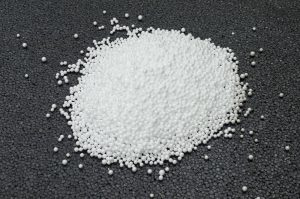
Disproving myths about styrofoam
In the modern world, foam plastic occupies an important place in various areas of construction and production. However, around this material there are often unverified ideas and myths that influence its perception. So let’s break down the most popular of them.
1. Styrofoam is not durable
The first Styrofoam plates began to be produced in the middle of the last century. There is evidence that styrofoam has been used for more than 60 years and has not lost its properties during this time. In general, the service life is estimated at 50 years, of course, this depends on compliance with the production technology. Styrofoam can be durable if it is installed correctly and protected from negative influences such as moisture, ultraviolet radiation and mechanical damage. You can protect yourself from these effects with the help of a reinforcing mesh, which is covered with foam, glue and plaster.
2. Styrofoam burns
The raw material for foam includes various additives that practically prevent it from igniting. In order for Styrofoam to catch fire, it needs almost 500 degrees, which is twice as much as for wood, and when burning, Styrofoam emits 5-8 times less heat energy than wood. Therefore, foam plastic does not support the combustion process and belongs to the flammability group “Г1”, so it can be used in various types of construction
3. Styrofoam absorbs moisture
During immersion in water, the foam can absorb water into the open granules that are on the sections. According to research, this indicator is 2% of its weight. After that, water absorption stops and the material does not lose its heat-insulating properties. Therefore, it is important to install foam plastic in compliance with all requirements.
4. Vapor permeability, they say foam plastic does not “breathe”
Styrofoam has sufficient vapor permeability. This makes it an effective insulator, as water cannot penetrate through it in its solid state. This feature is an important factor in maintaining a comfortable microclimate inside the room and prevents the formation of condensation in the middle of the walls.
You can even conduct an experiment. Take a sheet of foam, soap it up a little with water and blow from the opposite side. Bubbles will appear on the soapy part.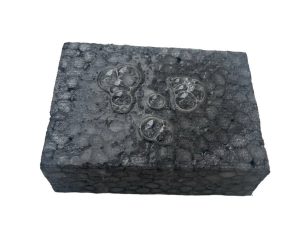
5. Not ecological
Expanded polystyrene is a homogeneous product of foaming without chemical additives. It does not emit any fumes during operation. Today it is one of the safest thermal insulation materials.
6. The softer the foam, the warmer it is?
The denser and harder the material is, the closer the pinosterol cells are to each other and retain heat energy, the lower the coefficient of thermal conductivity of the material, i.e. lower heat loss. Hence the conclusion, if we plan to minimize heat loss, then from two insulations of the same thickness, we need to choose the denser one. The coefficient of thermal conductivity of “Stolit” foam varies from 0.047 W/(m*K) to 0.032 W/(m*K) depending on the item marking.
Sorry, the comment form is closed at this time.